Experienced farmer and business woman plans to open 6 grocery stores in Maryland and is looking to partner with area fruit & vegetable growers that would be interested in contract growing a wide assortment of fruits and vegetables such as: tomatoes, onions, potatoes, beans, cabbage, beets, greens, leeks, garlic, watermelons, berries and tree fruits, as well as traditional African vegetables.
Opportunities exist for both conventional and organic crops. Two meetings to discuss plans and answer questions will be held on Wednesday February 27 and Wednesday March 6 at 9 am at the Prince Georges County Extension Office located at 6707 Groveton Drive, Clinton, MD 20735. In order to plan appropriately, please call by 4 pm on 2/26 or 3/5 to confirm your attendance. 301-868-9366.
Sincerely,
Candy
Candy Walter
Farm Management Agent
UMES, Small Farm Program
University of Maryland Extension
6707 Groveton Drive
Clinton, MD 20735
cjwalter@umes.edu
Phone: 301-868-9366
Fax: 301-599-6714
Laura Lengnick, Director, Sustainable Agriculture Program, Department of Environmental Studies, Warren Wilson College, will present: Is Your Farm Climate Ready? Best Practices for Managing Climate Risk on Your Farm at the MOFFA Winter Meeting, on February 16, 2013, from 8 to 5.
Are you prepared to manage the increased weather variability and extremes that are currently underway and predicted to intensify in the coming years as our planet warms? Over the next 10 to 15 years, projected changes in precipitation and temperature patterns will increase water and pest management challenges and the potential for crop failure.
Laura Lengnick will present a new way of thinking about climate risk and offers some best practices for managing climate risk challenges on your farm, at the MOFFA Annual Winter Meeting.
The event is February 16, 2013, at the MD Dept. of Agriculture Bldg., Annapolis MD it will run from 8 to 5. Laura Lengnick will speak from 3:35 to 4:30.
Laura serves as the Director of the Sustainable Agriculture Program, in the Department of Environmental Studies at Warren Wilson College, a small undergraduate college near Asheville, NC offering a liberal arts education through a triad of academics, work and service. Since joining the Warren Wilson faculty in 2002, Laura has been actively involved in sustainable agriculture advocacy in North Carolina: she is currently on the Carolina Farm Stewardship board of directors and is a past president and board member of the Appalachian Sustainable Agriculture Project. Laura advises and teaches in several community-based sustainable agriculture education programs and works with a number of citizens groups on issues around sustainable food systems, sustainable resource use and resilient community redesign. She brings to this work 25 years of research, teaching and public policy experience in soil quality and sustainability assessment, sustainable agriculture systems, and sustainable farm management.
Trained as a soil scientist, Laura’s work in sustainable production systems research at the Beltsville Agriculture Research Center was nationally recognized with a USDA Secretary’s Honor Award in 2000. She has federal agriculture policy expertise gained through work experiences as a U.S. Senate staffer, as a research scientist serving in the Executive Branch of the federal government, and as a private consultant and lobbyist advocating for sustainable and organic farmers in the U.S. Congress. While on sabbatical in 2011/12 as a visiting scientist on the USDA National Program Staff, Laura researched best practices for adapting agriculture to climate change as a lead author of the recently released USDA Report “Climate Change and U.S. Agriculture: Effects and Adaptation”. Laura’s work on the report included a focus on identifying effective practices for farmers faced with managing the increased variability in temperature and rainfall, extreme weather events and novel pest pressures associated with the climate change impacts currently underway in the U.S.
Click here to find more details about MOFFA Annual Winter Meeting.
Demeter, Greek Goddess of Agriculture, at the Maryland Department of Agriculture Building, where the Maryland Organic Food and Farming Association Annual Winter Meeting will be held on February 16, 2013, from 8 to 5.
The MOFFA Annual Winter Meeting is February 16, 2013, at the MD Dept. of Agriculture Bldg., Annapolis MD it will run from 8 to 5. The event includes a panel in the afternoon, from 1:40 to2:40 p.m., to discuss the new FDA Food Safety Rules, and what they mean for small, local, and organic farmers. Click here to find more details about MOFFA Annual Winter Meeting.
What will new FDA Food Safety Rules mean for small, local, and organic farmers?
Find out how the proposed rules could affect your growing, harvesting, on farm processing and post-harvesting handling practices. Find out what new labeling and record keeping requirements you may have to meet for sales on farm, at farmers markets, and to retailers and wholesalers. Learn about exemptions from certain requirements.
Presenter:
Ariane Lotti, Assistant Policy Director, National Sustainable Agriculture Coalition
Panelists:
Mike Tabor, Licking Creek Bend Farm, Needmore PA and Takoma Park, MD
and
Deanna Baldwin, Program Manager, Food Quality Assurance, Maryland Department of Agriculture
Ariane coordinates NSAC’s policy campaigns including organic and food safety issues.
She holds a B.A. and a Master of Environmental Management from Yale University. She has served as the Policy Director for the Organic Farming Research Foundation. She is a published author, and has worked on and conducted research on organic and conventional farms in the US and Europe.
Mike Tabor
Since 1972, Michael Tabor has been producing local fresh food for DC area residents of mixed income groups using organic methods. Mike has also been active in many causes to advance environmental and social justice, including access to healthy local food for inner city populations.
Deanna Baldwin
Deanna is responsible for the Maryland Organic Certification Program as well as other grading and certification programs, including Fruit and Vegetable Grading, Egg Grading, and Good Agricultural Practices/Good Handling Practices Certification. Deanna has a broad perspective on issues of food safety and local and organic production practices across Maryland.
MOFFA Board Member Liz Reitzig, is the Director of Communications of a great new program called FarmMatch. FarmMatch is a brand new tool designed to revolutionize how people choose their food! FarmMatch connects consumers worldwide with local farmers, buying clubs, farmers markets, and restaurants that offer fresh, sustainable, organic foods. the goal is to facilitate an explosive growth in direct farmer-to-consumer transactions thus transforming our landscape and health.
Imagine a world where people are deeply connected to their food sources. Imagine farmers who know their communities and who they can depend on!
Imagine the power behind an energized, committed consumer base to transform how people choose their food–supporting local farmers in the process, revitalizing economies and healing bodies.
Imagine consumers supporting a network of non-GMO, organic farmers to see a reemergence of truly organic foods and restoration of our precious soils!
Imagine chefs who see the value in a food renaissance and reach out to their local farms to source for their restaurants. Imagine the consumers who will flock to their restaurants to show their support for the chefs sourcing locally and for the farms supplying the food.
Imagine the political leverage of a people truly connected to their food sources–subsidies, “standards,” and “bans” would become obsolete as farmers, communities and individuals become strengthened by their interconnectedness. Imagine communities supporting farmers in need and standing strong and proudly with farmers facing aggression.
Imagine a world where people are deeply connected to their food sources.
All this is possible with the connection tools on FarmMatch.com
“Vision without action is merely a dream. Action without vision just passes the time. Vision with action can change the world.” –Joel Barker
We invite you to change the world with us!
Here is what you can do…
Put yourself ‘On the Map’: www.FarmMatch.com All individuals and local food businesses are invited to create a free profile to connect with farmers and buyers near them!
Blog about us or write an article or profile about FarmMatch
Spread the word by asking your members or community to sign-up also!
Maryland Pesticide Network (MPN) and the Maryland Food and Farming Association (MOFFA) are working hard to pass a bill creating a simple and cost-neutral, centralized, online, pesticide reporting database in Maryland’s 2013 General Assembly.
As organic farmers, we know about the serious risks that pesticides pose to our family’s health, to the Chesapeake Bay, drinking water, and local waterways, but Maryland lacks the information we need about some pesticide use, and the sales of restricted use pesticides. More information about when and where pesticides are used, will allow us to better protect our families and our waterways, including the Chesapeake Bay.
The Maryland Pesticide Network (MPN) is is a grassroots coalition of organizations in Maryland dedicated to protecting the public and the environment from toxic pesticides and promoting healthy alternatives. The Maryland Organic Food and Farming Association (MOFFA) is a member organization of MPN.
The Maryland Pesticide network, and other public health and environmental organizations are working hard to pass a bill creating a simple and cost-neutral, centralized, online, pesticide reporting database in Maryland’s 2013 General Assembly.
The proposed law is about:
Creating a data base to assess what pesticides are not harming our children and our water, and which ones might be – so that we can make educated choices about pesticide use on farms and lawns.
Farmers assisting public health officials to better assess the impact of pesticide use on our family health and the health of all Marylanders.
Agencies, public health professionals and scientists being able to access an online database on what watershed, when and where pesticides are being used.
Bill Framework:
Pesticide applicators including commercially licensed businesses, farmers and public agencies, are currently required to keep records on their pesticide usage at their place of business.
The bill requires annual submission of this data to a centralized system under MDA that can be accessed by government agencies, public health experts, and scientists.Farmers who contract with certified applicators would not need to report their contractor’s pesticide usage- only the pesticide applicator would need to report.
For farmers who apply their own pesticides, it takes about 2 minutes per pesticide application to report usage via a Smartphone or Ipad app, or to submit the information on computer, or mail in a hard copy to MDA. There is no cost to farmers other than the time it takes them to report.
The computer system would assemble data by watershed without identifying information about the individual submitter for use in analyzing the regional “load” of pesticides in the environment. The watershed size would typically be 20 square miles or larger.
We ask farmers’ support by signing on to the 2013 Pesticide Information Act_ Farmer _sign-on letter (pdf) to Governor O’Malley and leadership in the Maryland Senate and House chambers, to enact a law that will address the need for pesticide use data collection, so the impact of pesticides can be better understood and managed.
You also can sign on by responding to Ruth Berlin. Please provide your name, name of your farm, e-mail address and phone number. If you would like to do more to help us pass the bill in 2013, please let Ruth know.
Individuals, who are not farmers, are encouraged to sign a petition too.
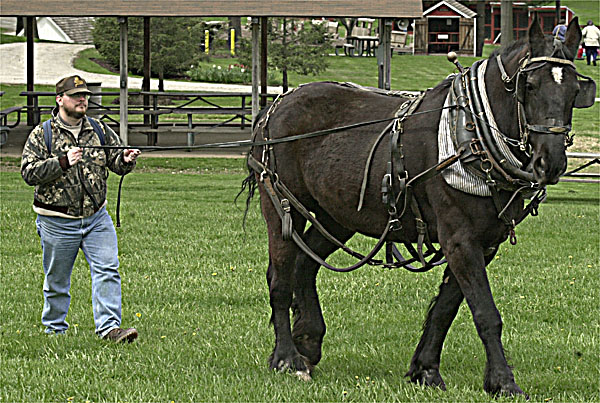
Tom Harbold at a draft-horse driving workshop Carroll County Farm Museum, in Westminster, Maryland
Listen. Hear that? Nope, me neither. It’s the deafening silence, from both sides of the political aisle, on issues of agriculture and the environment. Yes, I know that “it’s the economy, stupid.” As someone who is badly under-employed, and searching – so far unsuccessfully – for a position which will enable me to make a living by doing some good in the world, I am all too personally aware of the miserable state of our economy, as the year 2012 limps to a close, and of the need to find a way to recover.
That said, ignoring the environment in favor of the economy is a prescription for disaster, long-term. Please excuse me for a brief diversion into linguistics: “economy” is based on the Greek words “oikos,” meaning “household,” plus “nomos,” meaning “rule” or “management.” “Ecology” combines “household” with “logos,” meaning (in this context), “knowledge.” It makes not just linguistic but also practical sense to place knowledge of one’s household before management of it. Yet politicians on both sides of the aisle continue to try to manage the economy while remaining woefully, and willfully, ignorant of the ecology.
Furthermore, we live in a closed, finite system. Except for solar energy – sunlight, without which, so far as we know, no life could exist (except, perhaps, for some weird types near thermal vents in the deep ocean) – and occasional meteors, the only resources we possess are the ones contained on and within this planet. We have no other options. The bottom line is that the Earth is the bottom line. Yet the Obama administration is strangely silent on issues of the environment – or perhaps not so strangely, considering the number of individuals with ties to Monsanto that riddle it – while candidate Mitt Romney has openly mocked environmental concerns.
Referencing Obama’s assertion in his 2008 nomination acceptance speech that “We will be able to look back and tell our children that this was the moment … when the rise of the oceans began to slow and our planet began to heal” – words which, in retrospect, look more than a trifle optimistic – Romney declared that “President Obama promised to begin to slow the rise of the oceans,” pausing for the obligatory moment of laughter, “and to heal the planet. My promise … is to help you and your family.” While he may simply have meant that his ambitions were less grandiose, his comment left the clear implication that these are alternatives, between which we must choose.
The reality is that we are at a point in the history of humankind on Planet Earth where any attempt to help people and families must take into account the health and well-being of the local and planetary environment, or be doomed to failure. While economic stability is an important component of the sustainability equation (see this or other discussions of the “triple bottom line” – people, planet, and profits: http://www.ibrc.indiana.edu/ibr/2011/spring/article2.html), we are past the point where economics can safely be considered as something apart from, and mutually irrelevant to, ecology.
In a recent essay for the Scripps Howard News Service, columnist Bonnie Erbe has written about the economic consequences of several current and pending environmental issues, especially global climate change. These include a European study which indicates that climate change is already contributing to 400,000 deaths each year, worldwide, and costing the world’s economy more than $1.2 trillion, and the fact that in 2010, the International Displacement Monitoring Center estimated that more that 42 million people were forced to flee their homes due to disasters triggered by sudden-onset natural hazards.
Furthermore, a University of British Columbia study found that ocean fish could soon lose as much as 25% of their body weight, because they cannot maintain their weight in warming waters. The potential consequences to our food supply need no elaboration from me. MOFFA members are already well aware of the challenges to farming posed by climate change, including new and different insect pests – notably the marmorated stinkbug – as well as weather extremes ranging from droughts to flooding.
Regardless of whether one believes these events, and the climate change that causes them, are primarily anthropogenic (human-generated), primarily natural and cyclical, or something somewhere in between, they exist, and we have to deal with their consequences. Organic growers also have the deal with the consequences of the widespread use of GMOs, and the tremendous financial weight that can be brought to bear on the political process by their manufacturers, most notably Monsanto.
“the House version of the 2012 Farm Bill contains three industry-friendly provisions, numbered 10011, 10013, and 10014. Collectively, they have come to be known as the “Monsanto Rider,” and the name is entirely appropriate. If passed, this bill would make it more difficult to stem the tide of GMO foods hitting store shelves.
These three provisions in the 2012 Farm Bill would grant regulatory powers solely to the United States Department of Agriculture, preventing other federal agencies from reviewing GMO applications and preventing the USDA from accepting outside money for further study. The bill would also shorten the deadline for approval [from three years] to one year, with an optional 180-day extension. And here’s the kicker: the approval time bomb. If the USDA misses the truncated review deadline, the GMO in question is granted automatic approval.”
Yes, you read correctly. If the USDA does not have time to test and approve a proposed GMO in half the time it has now, that genetically-modified product is automatically approved as safe without any testing at all. Our Representatives need to hear from us – all of us – that this is not acceptable, and that a “yes” vote on a Bill containing these measures will carry consequences.
There is much to think about, as we move toward the 2012 elections. While the hands of the current administration are far from clean, when it comes to agriculture and the environment, its history and possible future actions must be weighed against the likely even greater deference shown to corporate interests should Obama’s opponent be elected to the Presidency. There are pluses and minuses to every choice, political and otherwise, of course; it is unlikely that anyone will agree with any candidate on every issue. But at least the elections do give us a chance to make our voices heard, and so far, at least, big-money interests have not managed to totally silence the voices of “we the people.”
Let’s get out there and exercise our franchise!
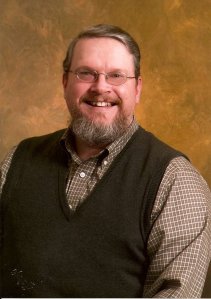
Tom Harbold writes from Hampstead, MD. Contact him at neodruid1@gmail.com.
Tom Harbold, Guest Blogger for Maryland Food and Farming Association
My name is Tom Harbold, and I’m honored to have been asked by Holly Heintz Budd to serve as a guest blogger for the Maryland Organic Food and Farming Association’s new website. What are my qualifications? Since 1998, I have been working mostly as an outdoor or environmental educator. I hold a BA and a Masters in humanities disciplines, and in 2001, I graduated with a certificate in park management with a concentration in environmental education from Frederick Community College.
I’ve served as an educator at the Carroll County Outdoor School, a flagship week-long educational enrichment program for Carroll County 6th graders, and as a naturalist at both the local (Piney Run, in Sykesville) and State (Cunningham Falls, near Thurmont) levels. I’ve been a conservation educator for the Carroll County chapter of Pheasants Forever, an international upland conservation organization. And from 2005-2009, I was active with Spoutwood Farm Center, Inc., an educational and community-supported agriculture farm in Glen Rock, PA, starting as a working shareholder with the CSA, and working my way up.
From 2007-2009, I served as Education Coordinator for Spoutwood, and also coordinated the work-and-learn (intern and apprentice) program for the farm. Spoutwood’s programs include a 100+ member CSA, the aforementioned work-and-learn program for those interested in learning to practice natural farming/sustainable agriculture, an excellent observatory which holds regular “Evenings of Wonder” to share the glory of the night sky, and (since my tenure there) “Teen Battle Chefs,” a youth development program exploring culinary arts, food systems and gardening education, while battling obesity and chronic disease.
In addition, Spoutwood offers two major public programs: the annual May Day Fairie Festival, a celebration of the mythic arts and the warming Earth, now in its 22nd year, and the Mother Earth Harvest Festival in September, dedicated to sustainable agriculture and sustainable living in general. Spoutwood is not certified organic, but has used organic techniques since its inception; and its CSA is Certified Naturally Grown. Spoutwood is a proud and active member of the Pennsylvania Association for Sustainable Agriculture, and its President, CEO, and chief land steward, Rob Wood, has served on the PASA board.
Spoutwood helped to turn my interest in sustainable and organic agriculture into a passion, but that interest goes back to my childhood, where my maternal grandparents were early adopters of the organic movement. I remember sitting fascinated for hours, in the living room of the old farmhouse in Dennisville, NJ, poring over copies of Rodale’s “Organic Gardening and Farming” magazine, or digging gallon ice-cream pails of kitchen scraps into their big garden to enrich the soil. My paternal grandmother lived on a workiing – though, sadly, not organic – farm in Highland, MD, so I got bitten by the farm bug on both sides!
As regards writing, since 2004 I have written a regular op-ed column for the Carroll County Times, which frequently deals with agricultural, environmental, or sustainability issues. I have also written essays and articles which have been published in The Bay Journal, the sadly now-defunct Edible Chesapeake, the Upland Journal, and Farming: People, Land, Community.
My interests include sustainable and organic agriculture education (obviously!), whole and natural foods cooking, environmental education and the relationship between agriculture and environmental stewardship, draft animal power (especially horses and oxen) for small farms and woodlots, renewable and alternative energy, green building, and supporting and empowering local communities. Not to mention growing and cooking with fresh, natural, and local, foods!
Influences include, but are not limited to, the inimitable Wendell Berry, Amish farmer, author and philosopher David Kline, and “the father of modern conservation,” Aldo Leopold. I also draw wisdom and inspiration from the likes of Nina Planck (“Real Food”), Joann S. Grohman (“Keeping a Family Cow,” and the online “Heifer Diary”), Barbara Kingsolver (“Animal, Vegetable, Mineral”), Michael Pollan (“The Omnivore’s Dilemma,” etc.), Richard Kunstler (“The Long Emergency”), Kim Hartke (“Hartke Online” blog), Mark Sissons and his “Primal Blueprint,” and the Weston A. Price Foundation, among others.
I appreciate the opportunity to share some of my thoughts with the MOFFA community, and look forward to getting to know you! Please don’t hesitate to contact me with questions or comments, and I shall do my best to respond in a timely manner. Happy and healthy farming, and eating!
“We abuse land because we see it as a commodity belonging to us. When we see land as a community to which we belong, we may begin to treat it with love and respect.” ~ Aldo Leopold
Tom Harbold lives in Hampstead, Maryland. Contact him at neodruid1@gmail.com.
Jersey cows graze on lush green pasture at the P. A. Bowen Farmstead
You are Invited!
4th Ever Pasture Party for Land Conservation!
Saturday, October 6th, 2012
11 AM to 3 PM
Location: P.A. Bowen Farmstead
5701 Dr. Bowen Road
Village of Aquasco
Brandywine, MD 20613
Welcome a new-fashioned, pasture-based farm! Join us for an afternoon of rural FUN while you learn about initiatives to conserve and renew our natural and cultural heritage.
Fun Activities to Celebrate Rural Living!
Live Music by “The Swampy Bottom Boys” and Special Guests!
Taste of Local-Potluck starts at 12 Noon
Hoops and stilts for kid fun
Nature scavenger hunt starts at 1 PM
Sustainable Door prizes
“Prettiest Cow” Contest!
Old Jar Flea Market/Farmer’s Market & Local Artisans /Red Bud Trees
“What is it?” collection of farm and home items from the past
Antique tractors and cars
Birds of prey/Pottery Making /Silent Auction
Scarecrow Stuffing … And more FUN
Informative Displays
SponsoredBy: The Black Swamp Creek Land Trust Inc., Maryland Organic Food and Farming Association, Prince George’s Soil Conservation District, The Paturxent Tidewater Land Trust and The Patuxent Riverkeeper. Agency and organizational representatives will be on hand to answer questions you may have about voluntary land conservation methods.
Please let us know if you are planning to attend, wish to contribute an activity, or volunteer! – contact Joanne (301) 502-3261 or blackswamp@me.com. The event is FREE, however donations are encouraged. See you there!

 Experienced farmer and business woman plans to open 6 grocery stores in Maryland and is looking to partner with area fruit & vegetable growers that would be interested in contract growing a wide assortment of fruits and vegetables such as: tomatoes, onions, potatoes, beans, cabbage, beets, greens, leeks, garlic, watermelons, berries and tree fruits, as well as traditional African vegetables.





 Maryland Organic Food & Farming Association