Liz Retzig will be presenting an update on cow share and raw milk legislation in Maryland at the 2014 MOFFA Winter Meeting.
In Maryland it is illegal to sell raw milk (as in unpasteurized, fresh-from-the-cow milk).
It is not illegal to drink fresh milk from the cow that you own, but it is illegal to even own a share of a cow in Maryland.
The Maryland General Assembly is considering lifting the ban on raw milk by reinstating cow shares which have been criminalized since 2006. This bill would do wonders for Maryland farmers who wish to engage directly with eager consumers wanting raw milk from their own animals. This legislation, once passed, would repeal the ban on cow shares (and goat) and allow people to contract directly with the farmers of their choice for raw milk. http://nourishingliberty.com/raw-milk-could-be-legal-in-maryland/
Liz is a Mother, a MOFFA Board Member, and the Co-Founder, Farm Food Freedom Coalition. Liz has been working hard to realize the availability of raw milk in Maryland. She blogs about the right for food choice at Nourishing Liberty .
The Maryland Organic Food and Farming Association 23rd Annual Winter Meeting, is on Saturday February 15, 2014, from 8 am to 5:00 pm, at the Maryland Department of Agriculture Building, 50 Harry S. Truman Parkway in Annapolis.
Registration is $20 for non-members and $5 for members. Membership is $25 for one year or $45 for two years. Registration is at the door.
Tanya Tolchin will be Exploring Low Tech Food Dehydration to Increase Profits on Small Farms at the MOFFA Winter Meeting on February 15, 2014.
Tanya says,
“One of the challenges we face on our farm is that we often grow more produce and flowers than we can market during the peak season. We are hopeful that dehydrating some of our fresh produce and creating new products like kale chips, dried tomatoes, dried herbs and dried f lowers, will help our farm be more profitable and resilient in the changing marketplace. In early 2013, we received a “Farmer Grant” from USDA’s Sustainable Agriculture Research and Education program (SARE) to build and test the two commercial scale dryers on our farm, one solar and one electric.”
Tanya is one of the newest member of the MOFFA board and the Vice Chair. She stepped in because she has dreams of MOFFA growing into a bigger and more powerful entity like the great Maine Organic Farmers and Gardeners Association. She is hoping to help MOFFA win grants and attract a broader membership base. Tanya and her husband Scott Hertzberg grow vegetables and flowers at Jug Bay Market Garden just 20 miles from Washington DC and around the corner from Heron There Farm. She is a manager of Israeli Harvest , a small business that supports farmers in Israel by selling organic olive oil and dates in the US. She writes about farming, parenting and Jewish life on her blog, On the Lettuce Edge, and else where. Prior to farming, she worked for Sierra Club in Washington DC for ten years on efforts to help protect national forests and build new strategic partnerships.
MOFFA, the Maryland Organic Food and Farming Association 23rd Annual Winter Meeting, is on Saturday February 15, 2014, from 8 am to 5:00 pm, at the Maryland Department of Agriculture Building, 50 Harry S. Truman Parkway in Annapolis.
Registration is $20 for non-members and $5 for members. Membership is $25 for one year or $45 for two years. Registration is at the door.
MOFFA, the Maryland Organic Food and Farming Association, announces its 23rd Annual Winter Meeting, on Saturday February 15, 2014, from 8 am to 5:00 pm, at the Maryland Department of Agriculture Building, 50 Harry S. Truman Parkway in Annapolis.
There will be Information for farmers and gardeners in search of new ideas, techniques, & inspiration, as well as networking opportunities for consumers and distributors looking for good sources of local, organic food.
MOFFA Chairperson Holly Budd says, “I am looking forward to the Panel Discussion on GMO and Food Safety Issues, Organic Food Justice Discussion, an update cow share and raw milk legislation in Maryland, and learning more about farming techniques and research from other organic farmers and researchers.”
Presentations, Panels and Workshops Include:
Panel Discussion GMO/Food Safety Issues Exciting News in State politics moderated by Sophia Maravell, Brickyard Educational Farm. Panelists include: Alexis Baden-Mayer Organic Consumer’s Association, Darla Eaton, Southern Exposure Seed Exchange, MD Delegate Ariana Kelly, Montgomery County, MD Sen. Karen Montgomery, Montgomery, Colin O’Neil, Center for Food Safety.
Panel Discussion: Organic Food Justice Panelists: Carrie Vaughn, Claggett Farm, Lavette Sims, Capitol Area Food Bank. Greg Bowen, Hub and Spoke Program for SMADC
Erroll Mattox from UMES – MD Cooperative Extension will be talking about ethnic vegetable production
Tanya Tolchin: Exploring Low Tech Food Dehydration to Increase Profits on Small Farms.
Mike Haigwood, PA Bowen Farm, “Grassfed and Beyond” – Mike recently returned from Australia where he was studying permaculture and he will include some of that in his presentation.
Maryland Green Registry A good program to share and improve green practices for your farm and great tool for consumers too
Good Agricultural Practices (GAP) Update on the Organic/GAP University research and GAP training session
Maryland Department of Agriculture Organic Program presentation
Tyler Brown Real Food Farm. Urban farming collective The Farm Alliance of Baltimore
Research Talks by Extension and UMD Researchers:
Buchanan, A., G. Chen, L. Hunt and C.R.R Hooks. 2014. Using cover crops for pest suppression in crookneck squash. Presented by Amanda Buchana
Chen, G., A. Buchanan, R. Weil and C.R.R. Hooks. 2014. Integrating reduced or no tillage systems with cover cropping for organic vegetable productions. Presented by Guihua Chen.
Attendees are encouraged to bring a dish to share for the potluck lunch, one of the highlights of the meeting.
Attendees can bring seeds to exchange with the other participants in the MOFFA Seed Swap.
There will be a silent auction. Members may bring display materials; table space is available in exchange for silent auction item donations.
Registration is $20 for non-members and $5 for members. Membership is $25 for one year or $45 for two years. Registration is at the door. For more information, go to http://www.marylandorganic.org or contact Holly Heintz Budd at 443-975-4181
Maryland Organic Food and Farming Association (MOFFA) was established in 1991 as a non-profit organization. MOFFA strives to build a sustainable network of individuals and organizations that support small farms, family gardens and ecologically sound businesses
MOFFA WINTER MEETING 2014 SCHEDULE
TIME
Room A
Room B
8:00-8:30
Registration
8:30 -8:45
Welcome and Announcements/Holly Budd MOFFA Chair
8:45-9:00
Laura Armstrong of MDE, Julie Oberg MDA Maryland Green Registry A good program to share and improve green practices for your farm and great tool for consumers too.
9:00-9:30
Shirley Micallef: update on GAP research and organic by Shirley Micallef, University of MD
9:30-9:45
Coffee Break, Silent Auction, Seed Swap Break into separate rooms
9:45-10:30
Buchanan, A., G. Chen, L. Hunt and C.R.R Hooks. 2014. Using cover crops for pest suppression in crookneck squash.
Presented by Amanda Buchana
Shirley Micallef, Donna Pahl: Pre harvest organic production and GAP
10:30-11:15
Chen, G., A. Buchanan, R. Weil and C.R.R. Hooks. 2014. Integrating reduced or no tillage systems with cover cropping for organic vegetable productions.
Presented by Guihua Chen.
Shirley Micallef, Donna Pahl: Post harvest organic and GAP
11:15-12:00
Mike Haigwood, PA Bowen Farm, “Grassfed and Beyond” – Mike recently returned from Australia where he was studying permaculture and he will include some of that in his presentation!
Deanna Baldwin, MDA Organic Certification FAQ. Certified Organic or considering certification? Deanna Balwin will update you and answer questions about NOP interpretations, and compliance with all of the rules.
Panel Discussion: GMO/Food Safety Issues Exciting News in State politics
Moderated by Sophia Maravell, Brickyard Educational Farm
Alexis Baden-Mayer Organic Consumer’s Association Darla Eaton, Southern Exposure Seed Exchange
MD Delegate Ariana Kelly, Montgomery County MD Sen. Karen Montgomery, Montgomery Colin O’Neil, Center for Food Safety
2:30-2:45
Last Chance for Silent Auction, Seed Swap, Grab Some Coffee, Break into separate rooms
2:45-3:30
Tanya Tolchin: Exploring Low Tech Food Dehydration to Increase Profits on Small Farms.
Liz Retzig Update cow share and raw milk legislation in Maryland
3:30-4:15
Erroll Mattox from UMES – MD Cooperative Extension will be talking about ethnic vegetable production
Panel Discussion: Organic Food Justice Panelists: Carrie Vaughn, Claggett Farm, Lavette Sims, Capitol Area Food Bank. Greg Bowen, Hub and Spoke Program for SMADC
4:15-5:00
Tyler Brown Real Food Farm. Urban farming collective The Farm Alliance of Baltimore
Lauren G. Hunt$, Armando Rosario-Lebron$ and Cerruti R2 Hooks*
University of Maryland Department of Entomology
$Graduate Student,*Associate Professor and Extension Specialist
Parasitic wasps are beneficial wasps that generally lay their eggs inside the egg, immature or adult stage of another insect commonly called its host. Eggs of these wasps then hatch, leaving the larval wasp which resembles a maggot to consume the contents of the host egg. After consuming the host, parasitic wasps complete their development within the host and later chew their way out and emerge as adult wasps. Parasitic wasps that attack stink bugs and other insect hosts typically consume nectar during their adult life. Studies have shown that the longevity (lifespan) and fecundity (reproductive capacity) of some parasitic wasps are enhanced when they are allowed to feed on nectar from flowering plants. This need for nectar suggests that the maintenance of nectar producing plants that can be readily assessed by stink bug and other insect parasitoids will support their conservation. Conservation of parasitoids through the provision of nectar increases the likelihood that insect pest eggs will get parasitized and consumed by developing wasps. Plants that are grown near crops for the purpose of attracting and providing a nutritious food source for beneficial insects are often called insectary plants. Thus, we hypothesize that parasitism of stink bug eggs can be increased in crops containing insectary plants along their periphery.
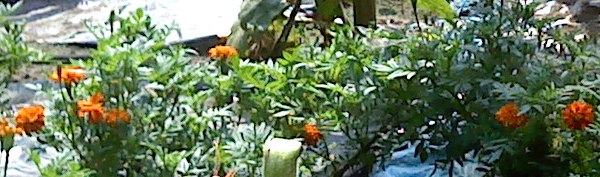
Our current study focuses on the use of insectary plant strips planted along crop borders for managing the invasive brown marmorated stink bug (BMSB) Halyomorpha halys and other stink bug pests [e.g., brown stink bug (Euschitus servus), rice stink bug (Oebalus pugnax), green stink bug (Acrosternum hilare), etc.] in conventional soybean and organic field corn plantings. Using a conservation biological control strategy, we developed an experimental design to determine if nectar-producing plants, French marigold (Tagetes patula ) “Single Gold” also sold under the brand name Nema-Gone, or buckwheat (Fagopyrum esculentum) and a purple tansy (Phacelia tanacetifolia) + buckwheat mixture when planted on the perimeter of soybean and corn plots, respectively, can attract and increase the effectiveness of predators and wasp parasitoids mainly belonging to the Scelionidae family. These beneficial wasps are very small, approximately 1/16 to 1/2 inch in length. Wasps from this family of insects are known to parasitize stink bug eggs including the BMSB and by doing so, effectively eliminate members of the stink bug population. We hope to provide these beneficial wasps a food source by planting these flowering strips, and subsequently increasing the suppression of stink bug populations within corn and soybean plantings.
Marigold is mostly known for its ability to suppress populations of plant-parasitic nematodes. Limited studies have been conducted on its ability to serve as an insectary plant. However, laboratory experiments have shown that the life span of one Scelionid wasp, Trissolcus basalis can be enhanced when they are allowed to feed on nectar from French marigold flowers. Thus, we hypothesize that French marigold flowers may benefit other parasitic wasps in the family Scelionidae. On the other hand, purple tansy and buckwheat flowers have been found to attract beneficial wasps; and in Maryland, purple tansy has been shown to specifically attract Scelionid wasps. Our goals include establishing whether the presence of these insectary plants will have a significant impact on the fauna of insect pests and beneficial arthropods (insects and spiders) associated with corn and soybean plantings. Additional objectives include determining whether these insectary plants will impact final crop yield and quality.
Though data is still being collected and has not been analyzed, from casual observation it is relatively apparent that buckwheat attracts a number of “hungry wasps”. However, purple tansy may be incompatible with MD climate as we noticed that the majority of plants were unable to flourish under field conditions. Most appeared to senesce or die within a few weeks following transplanting and displayed limited flowering. Thus, future plans include replacing the purple tansy + buckwheat mixture with partridge pea (Chamaecrista fasciculate).
Field studies conducted in Marylandshowed thatpartridge pea have some of the characteristics of a good insectary plant. It is compatible with MD growing conditions, flowers for the entire growing season given enough water and attracts beneficial parasitoids and predators. Partridge pea is a native annual legume found throughout the eastern United States. It is additionally reported to be drought tolerant and grows in disturbed and sandy areas such as roadsides, suggesting hardiness. Partridge pea produces yellow flowers and is considered an important contributor to honey production. The nectar source of partridge pea is found in glands at the leaf base called extrafloral nectaries (EFN), not in the flowers. Extrafloral nectaries are nectar-producing glands on a plant that is physically separate from the flower. Beginning with the third or fourth true leaf, a saucer shaped extrafloral nectary can be found at the base of each petiole of the partridge pea. These nectaries are very small (0.5–4 mm across), secrete up to three microliters of nectar a day, and almost every leaf has one nectary. In addition to other arthropods, partridge pea plants are visited by many different ant species which can only obtain nectar from the plant’s EFN. Though partridge pea attracts beneficial insects, it has been reported to be an important summer and fall host plant for the brown stink bug suggesting that partridge pea can serve potentially as both an insectary plant and trap crop.Trap cropping involves planting a plant species that is known to attract a pest near a crop susceptible to that pest, in order to lure it away from the crop. Next field season, we will investigate the potential of partridge pea to serve concurrently as an insectary plant and trap crop in organic field corn plantings.
The corn research project is being conducted in collaboration with Dr. Anne Nielsen at Rutgers University and is funded by a USDA National Institute of Food and Agriculture (NIFA) grant (2012-51300-20097) that was awarded through the Organic Research and Extension Initiative (OREI) program. This program focuses on helping producers and processors who have already adopted organic standards to grow and market high quality organic agricultural products. The soybean research project is made possible through funding by the Maryland Soybean board. If there are any questions regarding these projects and the use of insectary plants feel free to email Lauren, Armando or Cerruti. Their email addresses can be found under personnel at “cerrutirrhookslab.umd.edu/”.
Laura Lengnick, Director, Sustainable Agriculture Program, Department of Environmental Studies, Warren Wilson College, will present: Is Your Farm Climate Ready? Best Practices for Managing Climate Risk on Your Farm at the MOFFA Winter Meeting, on February 16, 2013, from 8 to 5.
Are you prepared to manage the increased weather variability and extremes that are currently underway and predicted to intensify in the coming years as our planet warms? Over the next 10 to 15 years, projected changes in precipitation and temperature patterns will increase water and pest management challenges and the potential for crop failure.
Laura Lengnick will present a new way of thinking about climate risk and offers some best practices for managing climate risk challenges on your farm, at the MOFFA Annual Winter Meeting.
The event is February 16, 2013, at the MD Dept. of Agriculture Bldg., Annapolis MD it will run from 8 to 5. Laura Lengnick will speak from 3:35 to 4:30.
Laura serves as the Director of the Sustainable Agriculture Program, in the Department of Environmental Studies at Warren Wilson College, a small undergraduate college near Asheville, NC offering a liberal arts education through a triad of academics, work and service. Since joining the Warren Wilson faculty in 2002, Laura has been actively involved in sustainable agriculture advocacy in North Carolina: she is currently on the Carolina Farm Stewardship board of directors and is a past president and board member of the Appalachian Sustainable Agriculture Project. Laura advises and teaches in several community-based sustainable agriculture education programs and works with a number of citizens groups on issues around sustainable food systems, sustainable resource use and resilient community redesign. She brings to this work 25 years of research, teaching and public policy experience in soil quality and sustainability assessment, sustainable agriculture systems, and sustainable farm management.
Trained as a soil scientist, Laura’s work in sustainable production systems research at the Beltsville Agriculture Research Center was nationally recognized with a USDA Secretary’s Honor Award in 2000. She has federal agriculture policy expertise gained through work experiences as a U.S. Senate staffer, as a research scientist serving in the Executive Branch of the federal government, and as a private consultant and lobbyist advocating for sustainable and organic farmers in the U.S. Congress. While on sabbatical in 2011/12 as a visiting scientist on the USDA National Program Staff, Laura researched best practices for adapting agriculture to climate change as a lead author of the recently released USDA Report “Climate Change and U.S. Agriculture: Effects and Adaptation”. Laura’s work on the report included a focus on identifying effective practices for farmers faced with managing the increased variability in temperature and rainfall, extreme weather events and novel pest pressures associated with the climate change impacts currently underway in the U.S.
Click here to find more details about MOFFA Annual Winter Meeting.
Maryland Pesticide Network (MPN) and the Maryland Food and Farming Association (MOFFA) are working hard to pass a bill creating a simple and cost-neutral, centralized, online, pesticide reporting database in Maryland’s 2013 General Assembly.
As organic farmers, we know about the serious risks that pesticides pose to our family’s health, to the Chesapeake Bay, drinking water, and local waterways, but Maryland lacks the information we need about some pesticide use, and the sales of restricted use pesticides. More information about when and where pesticides are used, will allow us to better protect our families and our waterways, including the Chesapeake Bay.
The Maryland Pesticide Network (MPN) is is a grassroots coalition of organizations in Maryland dedicated to protecting the public and the environment from toxic pesticides and promoting healthy alternatives. The Maryland Organic Food and Farming Association (MOFFA) is a member organization of MPN.
The Maryland Pesticide network, and other public health and environmental organizations are working hard to pass a bill creating a simple and cost-neutral, centralized, online, pesticide reporting database in Maryland’s 2013 General Assembly.
The proposed law is about:
Creating a data base to assess what pesticides are not harming our children and our water, and which ones might be – so that we can make educated choices about pesticide use on farms and lawns.
Farmers assisting public health officials to better assess the impact of pesticide use on our family health and the health of all Marylanders.
Agencies, public health professionals and scientists being able to access an online database on what watershed, when and where pesticides are being used.
Bill Framework:
Pesticide applicators including commercially licensed businesses, farmers and public agencies, are currently required to keep records on their pesticide usage at their place of business.
The bill requires annual submission of this data to a centralized system under MDA that can be accessed by government agencies, public health experts, and scientists.Farmers who contract with certified applicators would not need to report their contractor’s pesticide usage- only the pesticide applicator would need to report.
For farmers who apply their own pesticides, it takes about 2 minutes per pesticide application to report usage via a Smartphone or Ipad app, or to submit the information on computer, or mail in a hard copy to MDA. There is no cost to farmers other than the time it takes them to report.
The computer system would assemble data by watershed without identifying information about the individual submitter for use in analyzing the regional “load” of pesticides in the environment. The watershed size would typically be 20 square miles or larger.
We ask farmers’ support by signing on to the 2013 Pesticide Information Act_ Farmer _sign-on letter (pdf) to Governor O’Malley and leadership in the Maryland Senate and House chambers, to enact a law that will address the need for pesticide use data collection, so the impact of pesticides can be better understood and managed.
You also can sign on by responding to Ruth Berlin. Please provide your name, name of your farm, e-mail address and phone number. If you would like to do more to help us pass the bill in 2013, please let Ruth know.
Individuals, who are not farmers, are encouraged to sign a petition too.
Tom Harbold, Guest Blogger for Maryland Food and Farming Association
My name is Tom Harbold, and I’m honored to have been asked by Holly Heintz Budd to serve as a guest blogger for the Maryland Organic Food and Farming Association’s new website. What are my qualifications? Since 1998, I have been working mostly as an outdoor or environmental educator. I hold a BA and a Masters in humanities disciplines, and in 2001, I graduated with a certificate in park management with a concentration in environmental education from Frederick Community College.
I’ve served as an educator at the Carroll County Outdoor School, a flagship week-long educational enrichment program for Carroll County 6th graders, and as a naturalist at both the local (Piney Run, in Sykesville) and State (Cunningham Falls, near Thurmont) levels. I’ve been a conservation educator for the Carroll County chapter of Pheasants Forever, an international upland conservation organization. And from 2005-2009, I was active with Spoutwood Farm Center, Inc., an educational and community-supported agriculture farm in Glen Rock, PA, starting as a working shareholder with the CSA, and working my way up.
From 2007-2009, I served as Education Coordinator for Spoutwood, and also coordinated the work-and-learn (intern and apprentice) program for the farm. Spoutwood’s programs include a 100+ member CSA, the aforementioned work-and-learn program for those interested in learning to practice natural farming/sustainable agriculture, an excellent observatory which holds regular “Evenings of Wonder” to share the glory of the night sky, and (since my tenure there) “Teen Battle Chefs,” a youth development program exploring culinary arts, food systems and gardening education, while battling obesity and chronic disease.
In addition, Spoutwood offers two major public programs: the annual May Day Fairie Festival, a celebration of the mythic arts and the warming Earth, now in its 22nd year, and the Mother Earth Harvest Festival in September, dedicated to sustainable agriculture and sustainable living in general. Spoutwood is not certified organic, but has used organic techniques since its inception; and its CSA is Certified Naturally Grown. Spoutwood is a proud and active member of the Pennsylvania Association for Sustainable Agriculture, and its President, CEO, and chief land steward, Rob Wood, has served on the PASA board.
Spoutwood helped to turn my interest in sustainable and organic agriculture into a passion, but that interest goes back to my childhood, where my maternal grandparents were early adopters of the organic movement. I remember sitting fascinated for hours, in the living room of the old farmhouse in Dennisville, NJ, poring over copies of Rodale’s “Organic Gardening and Farming” magazine, or digging gallon ice-cream pails of kitchen scraps into their big garden to enrich the soil. My paternal grandmother lived on a workiing – though, sadly, not organic – farm in Highland, MD, so I got bitten by the farm bug on both sides!
As regards writing, since 2004 I have written a regular op-ed column for the Carroll County Times, which frequently deals with agricultural, environmental, or sustainability issues. I have also written essays and articles which have been published in The Bay Journal, the sadly now-defunct Edible Chesapeake, the Upland Journal, and Farming: People, Land, Community.
My interests include sustainable and organic agriculture education (obviously!), whole and natural foods cooking, environmental education and the relationship between agriculture and environmental stewardship, draft animal power (especially horses and oxen) for small farms and woodlots, renewable and alternative energy, green building, and supporting and empowering local communities. Not to mention growing and cooking with fresh, natural, and local, foods!
Influences include, but are not limited to, the inimitable Wendell Berry, Amish farmer, author and philosopher David Kline, and “the father of modern conservation,” Aldo Leopold. I also draw wisdom and inspiration from the likes of Nina Planck (“Real Food”), Joann S. Grohman (“Keeping a Family Cow,” and the online “Heifer Diary”), Barbara Kingsolver (“Animal, Vegetable, Mineral”), Michael Pollan (“The Omnivore’s Dilemma,” etc.), Richard Kunstler (“The Long Emergency”), Kim Hartke (“Hartke Online” blog), Mark Sissons and his “Primal Blueprint,” and the Weston A. Price Foundation, among others.
I appreciate the opportunity to share some of my thoughts with the MOFFA community, and look forward to getting to know you! Please don’t hesitate to contact me with questions or comments, and I shall do my best to respond in a timely manner. Happy and healthy farming, and eating!
“We abuse land because we see it as a commodity belonging to us. When we see land as a community to which we belong, we may begin to treat it with love and respect.” ~ Aldo Leopold
Tom Harbold lives in Hampstead, Maryland. Contact him at neodruid1@gmail.com.
Jersey cows graze on lush green pasture at the P. A. Bowen Farmstead
You are Invited!
4th Ever Pasture Party for Land Conservation!
Saturday, October 6th, 2012
11 AM to 3 PM
Location: P.A. Bowen Farmstead
5701 Dr. Bowen Road
Village of Aquasco
Brandywine, MD 20613
Welcome a new-fashioned, pasture-based farm! Join us for an afternoon of rural FUN while you learn about initiatives to conserve and renew our natural and cultural heritage.
Fun Activities to Celebrate Rural Living!
Live Music by “The Swampy Bottom Boys” and Special Guests!
Taste of Local-Potluck starts at 12 Noon
Hoops and stilts for kid fun
Nature scavenger hunt starts at 1 PM
Sustainable Door prizes
“Prettiest Cow” Contest!
Old Jar Flea Market/Farmer’s Market & Local Artisans /Red Bud Trees
“What is it?” collection of farm and home items from the past
Antique tractors and cars
Birds of prey/Pottery Making /Silent Auction
Scarecrow Stuffing … And more FUN
Informative Displays
SponsoredBy: The Black Swamp Creek Land Trust Inc., Maryland Organic Food and Farming Association, Prince George’s Soil Conservation District, The Paturxent Tidewater Land Trust and The Patuxent Riverkeeper. Agency and organizational representatives will be on hand to answer questions you may have about voluntary land conservation methods.
Please let us know if you are planning to attend, wish to contribute an activity, or volunteer! – contact Joanne (301) 502-3261 or blackswamp@me.com. The event is FREE, however donations are encouraged. See you there!






 Maryland Organic Food & Farming Association